Menu
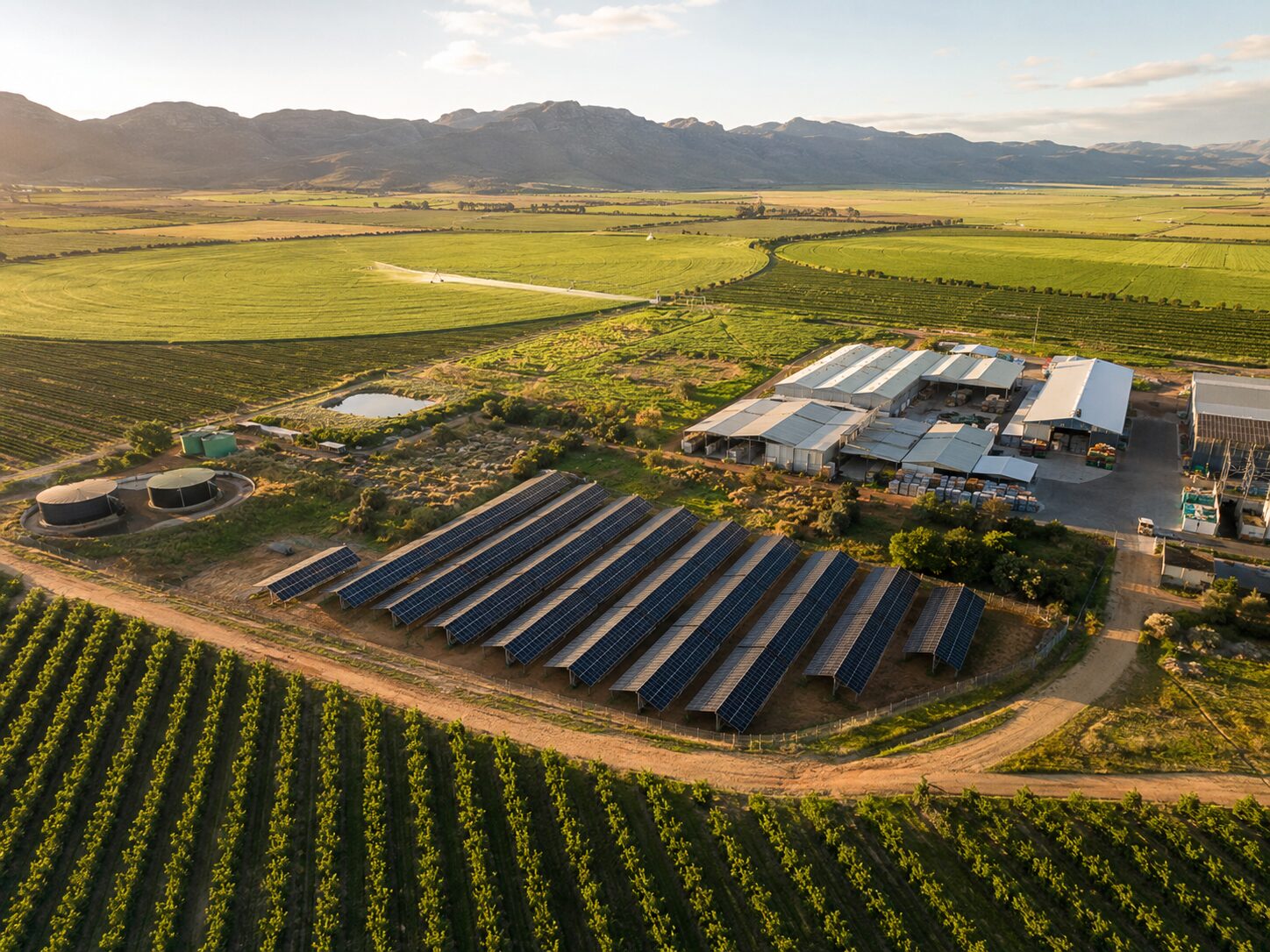
Productive land. Productive energy.
SOLAMG helps farms and agricultural businesses examine both sides of the opportunity: selling qualifying renewable generation and buying renewable energy around demanding operational loads.
Energy is embedded in modern farming.
Irrigation, pumping, cold storage, packhouses, processing, ventilation and refrigeration make energy a material operating input. At the same time, farms may have land, roofs and renewable resources suited to generation.
The best opportunity depends on the operating reality—not a generic solar assumption.
Different operations create different energy opportunities.
Irrigation & pumping
Daytime electricity demand may align well with solar output, but seasonal water needs and pump schedules still matter.
Cold chain
Packhouses and cold stores may have substantial, consistent loads that require careful interval-data analysis.
Processing
Milling, sorting, drying, bottling and value-add operations can create meaningful commercial energy demand.
Surplus generation
Existing or planned renewable assets may produce exportable energy beyond the site’s own consumption.
Business groups
Related farms, facilities or operating entities may have different meters, tariffs and legal structures to coordinate.
Grid realities
Rural network capacity, connection arrangements, voltage level and meter access can determine feasibility.
Have land, roofs or an operating plant?
We can assess the project profile, export capacity, grid position, generation data and commercial objectives to understand whether a route to market may exist.
Have a costly or complex load?
We can profile the operation’s accounts, meters, interval data, tariff and procurement objectives to evaluate a renewable purchasing pathway.
Useful agricultural information.
Accounts & meters
All supply points, tariffs, network operator details and recent electricity accounts.
Demand data
Interval data, operating hours, seasonal cycles and major energy-using equipment.
Project information
Generation design, capacity, connection status, forecast output and development timing.
Operational outlook
Planned expansion, new irrigation, packhouse changes and future energy requirements.